ICP constraints
State firmographic criteria, technographic clues, geography, and exclusions before discovery begins.
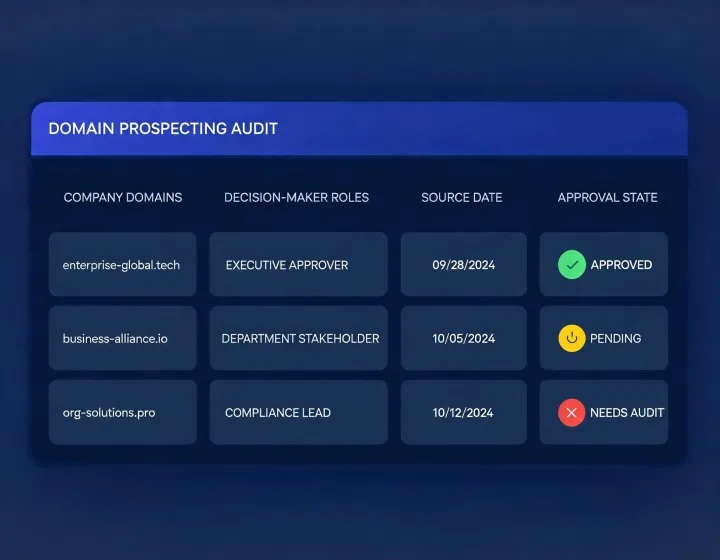
Sales intelligence inside your AI agent
Use Lusha-oriented prospecting workflows to discover accounts, resolve company identity, evaluate decision-maker relevance, and preserve source context before a person approves any outreach.
Open the installation runbookSix controls for dependable prospecting
State firmographic criteria, technographic clues, geography, and exclusions before discovery begins.
Compare operating name, legal identity, domain, location, and dated events before records merge.
Connect a decision-maker’s function and seniority to the buying problem instead of relying on title alone.
Keep observation dates and evidence context visible so reviewers can challenge stale or conflicting fields.
Separate verified, config-dependent, and unresolved information rather than filling gaps with inference.
Require human review of relevance, suppression, opt-out handling, and regional requirements before sending.
Installation runbook
npx -y @okki-global/okki-go-taroballSuccess means the exact command is on your clipboard; no package has run yet.
Execute it in a supported terminal, inspect the package prompt, and record the installed version.
Connect only approved sources and store API keys outside prompts, repositories, exports, and shared logs.
Use known companies, then check domain identity, dates, provenance, exclusions, and role relevance.
Review questions
No. Copying changes only the clipboard. Installation begins only when an operator runs the command and accepts the package prompt.
Use a runtime secret store with minimum scope. Never place credentials in an AI prompt, source file, exported record, or support screenshot.
No. Funding, hiring, and leadership changes are observations that may justify research; they do not prove budget, timing, or buying interest.
Research and drafting should remain separate from sending. A person must review relevance, verification, suppression, opt-out language, and applicable regional rules.
Test a documented cohort containing known positives, exclusions, ambiguous identities, and stale events. Report unresolved fields separately from rejected matches.
Keep the source, observation date, accepted field, rejected alternative, reviewer, and downstream decision so corrections remain explainable.